

























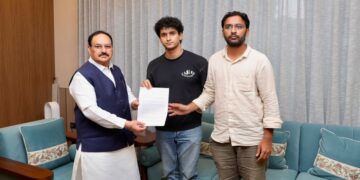


Venkata Sriram, founder of Evaluators and a National Book of Records holder, is engaging with the changing dynamics of recruitment through the development of artificial intelligence based skill assessment systems. His work comes at a time when industries are re examining traditional hiring practices and placing greater importance on demonstrable skills.
The platform developed under his organization focuses on evaluating the practical abilities of students and job seekers. It is designed to provide a structured method for candidates to present their competencies in a format that can be reviewed and verified by employers. This approach reflects a broader movement toward skill based hiring, where measurable performance is increasingly considered alongside academic qualifications.
The use of AI in evaluation systems is being explored across sectors as companies seek more efficient ways to identify suitable candidates. By integrating automated assessment tools, platforms like the one developed by Venkat attempt to reduce subjectivity in recruitment processes. Such systems also aim to help employers match job requirements with candidate capabilities more accurately.
A key aspect of the initiative involves addressing concerns related to unreliable job opportunities. Reports of misleading job listings and informal hiring channels have raised questions about transparency in the employment market. Structured evaluation platforms are being positioned as one method to improve credibility by offering standardized assessments and clearer benchmarks for selection.
In addition to technology development,Venkat has been involved in conducting workshops and awareness sessions for students and early career professionals. These programs focus on preparing individuals for employment by helping them understand industry expectations, develop relevant skills, and navigate career pathways. The emphasis on career readiness reflects a growing recognition that employability depends on continuous learning and adaptability.
His efforts also intersect with discussions on inclusion in workforce development. Initiatives encouraging wider participation in skill building programs, including among women, are part of ongoing efforts to create more balanced professional environments. Expanding access to training and evaluation opportunities is considered important in addressing gaps in representation across industries.
Venkat’s work has received recognition from institutional bodies, including the National Pride and Excellence Award presented by the Tretayug Foundation on 26 January 2026. The recognition highlights contributions to areas such as innovation and workforce development, which remain central to discussions on economic growth and employment generation.
Those familiar with his work point to the role of collaborative support in entrepreneurial journeys.Venkat has acknowledged the encouragement of his brothers, Rajesh Gowda and Arun Kumar, as part of his professional path.
The larger context of these developments reflects a shift toward data oriented hiring practices. Employers are increasingly exploring tools that provide insights into candidate performance beyond traditional resumes. At the same time, candidates are seeking platforms that allow them to demonstrate their abilities in a credible and accessible manner.
While AI based hiring solutions continue to evolve, they are becoming part of a wider conversation about fairness, transparency, and efficiency in recruitment. Efforts like those led by Venkat illustrate how technology is being applied to address long standing challenges in connecting talent with opportunity.
As industries adapt to changing workforce needs, initiatives that combine assessment, training, and outreach are likely to play a role in shaping future employment practices.
Through technology, education, and community engagement, Venkat continues to work toward bridging the gap between talent and opportunity in today’s competitive employment landscape.